5 Instagram photos that sell for a small shop (and you can take them with your phone)
Instagram is just another shop window, except it fits in your hand and gets looked at for a second and a half. Here are the five photos that really sell for a small shop and how to take them with your phone.
Every week I see the same thing on small shops' Instagram accounts: a photo of the window taken from across the street with a car reflected in it, a "New season!" poster made from a template and, now and then, a garment on a hanger against a white wall. None of that sells. Not because it's badly done, but because it tells nobody anything. I've spent my whole life putting up shop windows and I'll tell you this: Instagram is just another window, except it fits in your hand and gets looked at for a second and a half. Today I'll show you the five photos that really work for a small shop, and you can take all of them with your phone.
In a nutshell: the five Instagram photos that sell best for a small shop are the product in the hand, the close-up detail, the product in real life, hands at work and the shop from the street. You take them with your phone, in window light and in 3:4 portrait. What makes them work is that they tell something nobody else can: your product, your craft and your place.
Before you shoot: why one photo sells and another doesn't
I'll start with two facts, because I don't like talking from hearsay. The first comes from Etsy, which lives precisely off small shops and handmade pieces: in its buyer surveys, 90% say photo quality is "extremely" or "very" important to their purchase decision. They say so in their own seller handbook. The second comes from Adam Mosseri, the head of Instagram, who since 2025 has been repeating in his videos that the signal that weighs most for content to reach people who don't follow you is someone sending it to another person by message, and that the platform rewards original content over what's copied from other accounts.
Put both together and you have the rule: take your own photos (no supplier catalogue images, nothing from Pinterest) and make them the kind people want to send to someone with a "look at this, you'd love it". That's exactly what the five photos below are after.
1. The product in the hand
This is the photo I miss most in small shops. A hand holding the bag, the mug, the earring. The hand gives scale (people instantly understand whether it's big or small), adds warmth and turns an object into something you can touch. Look at this one: blurred background, soft light, the leather leads and the hand presents it without stealing the show.
Photo: Make It Kenya (public domain, via Openverse)
How to take it: get close to a window, switch off the ceiling light (it mixes colours and muddies everything), ask someone to hold the piece and shoot with your phone at product height, not from above. Clean nails, no watches or bracelets to distract.
2. The close-up detail
In a physical shop, customers pick up the garment, feel the fabric, look at the seam inside. On Instagram they can't. Your job is to do it for them. The detail is the photo that justifies the price: the uneven glaze of a handmade mug, the finish of a hem, the grain of the wood, the thread of an embroidery.
Photo: John Beans (CC BY 2.0, via Openverse)
How to take it: don't use digital zoom, it ruins the image; move closer yourself. Most current phones have a macro mode or focus very close. Tap the screen on the detail to focus and lower the exposure a little by sliding your finger, so the whites don't burn out.
3. The product in real life
The hanger against the white wall tells you what it is. This photo tells you what it's for. The mug on a Sunday morning with a book, the blanket on the sofa, the jacket worn out in the street. This is where people picture themselves with your product, and it's the photo that gets saved and shared the most, because it's no longer an ad, it's a scene.
Photo: homegets.com (CC BY 2.0, via Openverse)
How to take it: choose a simple scene your customer recognises as their own. Three or four objects at most, and none competing with yours. When in doubt between adding and removing, remove. It's the same rule I told you about in the post on signature shop windows on a small budget.
4. Hands at work
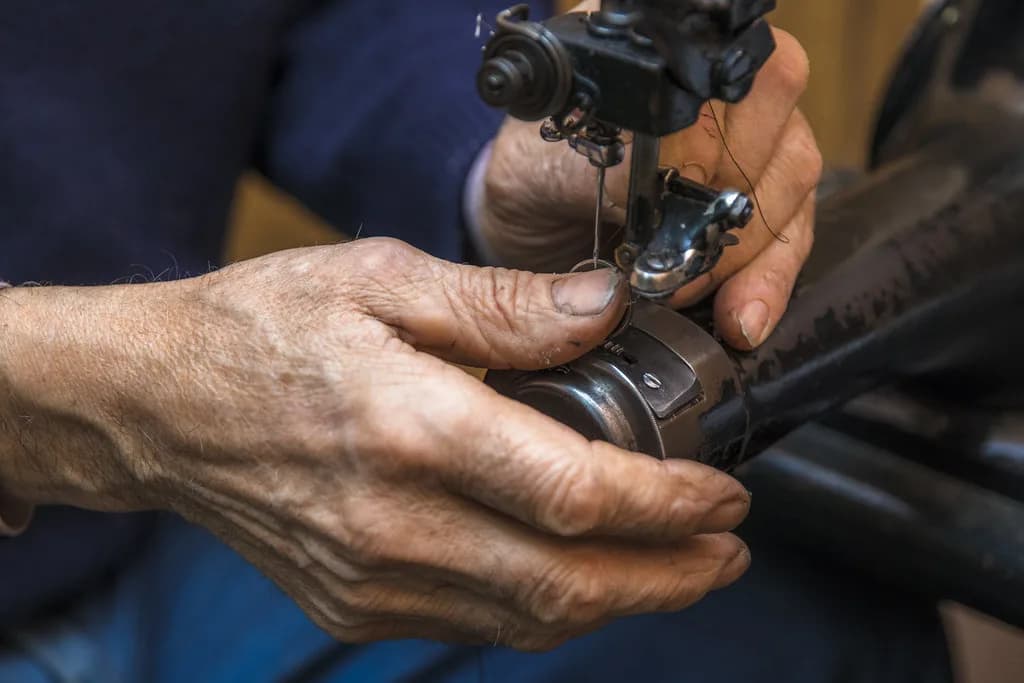
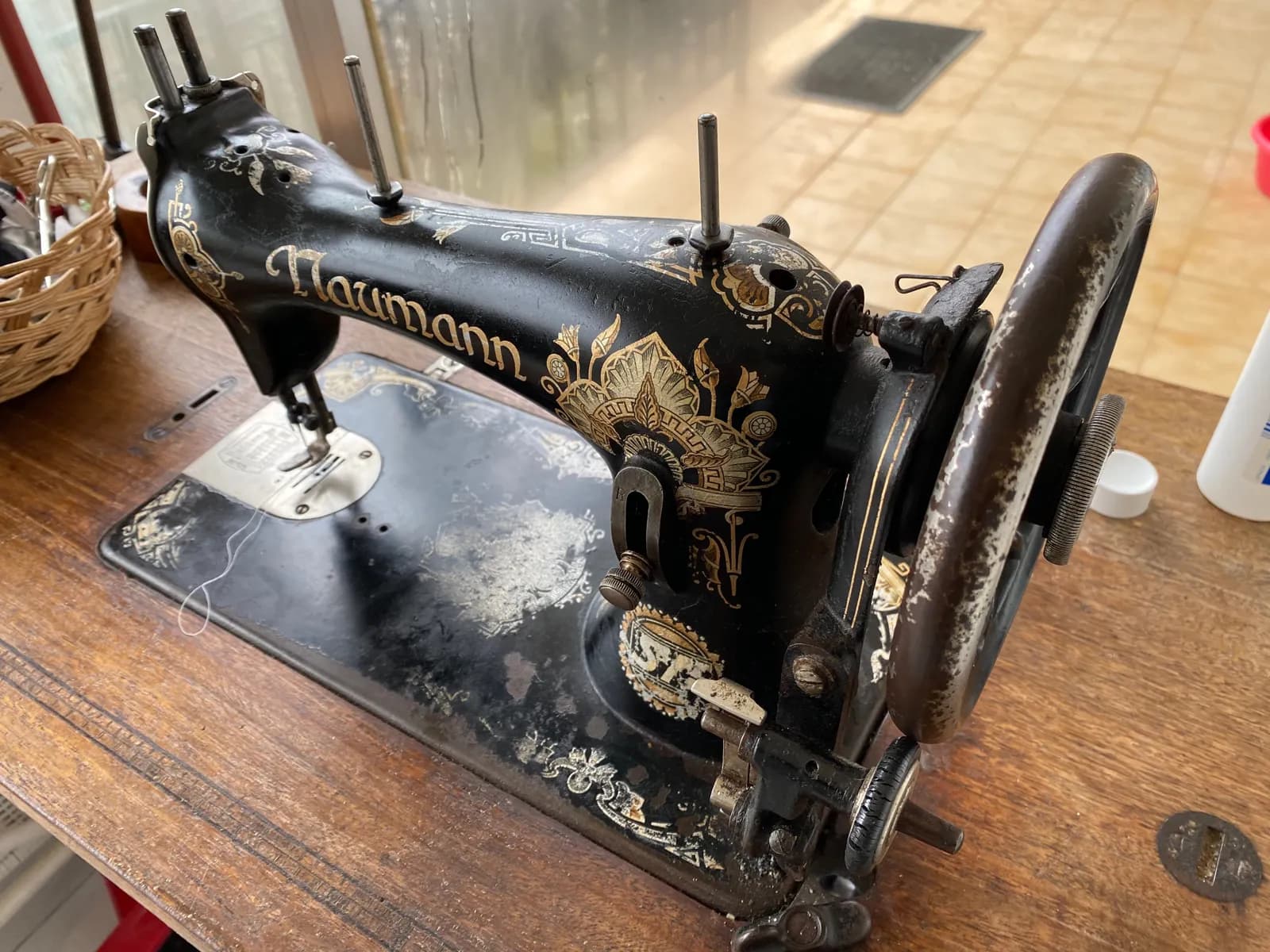
This is the photo no big chain can take, and that's why it's your best weapon. Hands threading the machine needle, cutting a pattern, raising clay on the wheel. The process tells people there's a person behind it, hours of craft and a way of doing things. It's what we at Barronico call phygital craftsmanship: the craft of always, told on screen too.
Photo: Ivan Radic (CC BY 2.0, via Openverse)
Photo: Walt Stoneburner (CC BY 2.0, via Openverse)
How to take it: rest your phone on something steady (a jar, a few books) and record a short video of what you're doing; then pull the best frame from it or post it as it is as a reel. Your face doesn't need to appear. The hands, the material and the tool tell the whole story.
5. The shop from the street
The last one says where you are. Not the window shot full of reflections, but your shop in its street: the facade, the open door, a mannequin on the pavement, people walking past. This photo turns a follower into someone who comes to see you. It also helps people find you, just like the Google Maps listing I talked about in the previous post.
Balborraz, Zamora. Photo: Juan Carlos Barrón
How to take it: first thing in the morning or in the golden light of the afternoon, when the sun isn't hitting the glass head on. Stand slightly at an angle to avoid your own reflection and let a bit of the street show, because it's part of your story.
Three tweaks that change everything without spending a penny
+Wipe your phone lens with your T-shirt before every photo. It sounds silly, but half the "foggy" photos I see are fingerprints.
+Shoot in 3:4 portrait (1080 by 1440 pixels). Since 2025 your profile grid shows photos in that format, and if you upload another ratio it crops them.
+Window light whenever you can, and never the phone flash. Side light draws out texture; flash flattens it.
And the caption underneath, which sells too
A good photo with an empty caption only does half the job. Write the way you talk at the counter: what it is, who made it, how much it costs and how to get it. Yes, the price. Lots of people don't ask out of embarrassment and just leave. And always close with something concrete: "Drop by the shop", "Send us a message and we'll keep it for you". If nobody knows what to do after seeing the photo, they'll do nothing.
You don't need to post every day. With two or three good photos a week, rotating these five, you'll have a profile that looks like a shop with an eye, not a notice board.
Frequently asked questions
What kind of photos sell best on Instagram for a small shop?+
The ones only you can take: the product in the hand, the close-up detail, the product in real life, hands at work and the shop from the street. Original photos work better than supplier catalogue images.
What size should Instagram photos be?+
The safest choice is 3:4 portrait, 1080 by 1440 pixels, because that's the format the profile grid has used since 2025, so your photo won't be cropped.
Do I need a professional camera for my shop photos?+
No. A current phone, a clean lens and window light are enough. Knowing what to tell in each photo matters more than the equipment.
Who's writing
Juan Carlos Barrón
Web designer, event organiser, visual merchandiser, window dresser and retail consultant with 28 years in stores such as Zara, Chanel, Lladró and Galeries Lafayette. Now, from the beautiful Calle Balborraz, at number 14, in Zamora, to the world: in Spanish, English and French.