Prada sells on ChatGPT and draws Christmas by hand: how luxury plays the AI game
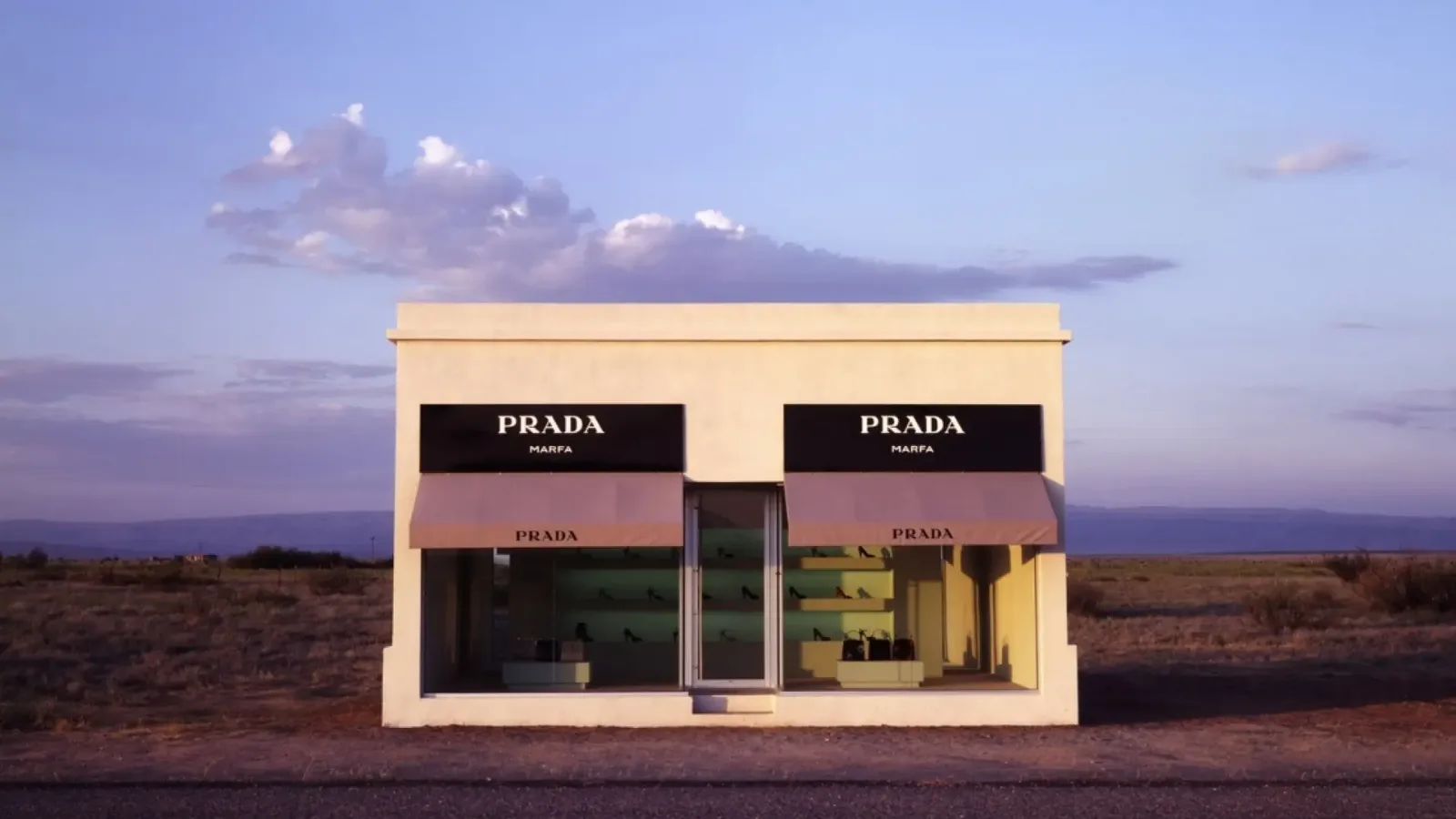
Prada just opened a shop inside ChatGPT and, at the same time, entrusted its Christmas campaign to Disney animators who draw every frame by hand. Two opposite moves that reveal how luxury understands the coexistence of technology and craft.
October 2026 delivered two Prada stories that, read together, say more than either one alone. First: the Italian group becomes the first luxury fashion house to sell inside ChatGPT, with a product-discovery pilot developed alongside Accenture Song and DaVinci Commerce. Second: its Christmas campaign, 'Drawing Prada', dispenses with every generative tool and entrusts each frame to Disney veterans who draw with pencils.
The combination is not contradictory. It is a statement of intent: technology serves when it broadens access to the brand's universe; craft prevails when emotion is at stake.
Prada opens shop inside ChatGPT
The pilot, available in the United States, the United Kingdom and Italy, lets users explore Prada's collections through a ChatGPT conversation. You describe what you are looking for — a bag for a dinner, trainers for travel — and the AI presents options drawn directly from the brand's catalogues, store information included.
Laura Campanella, Prada Group's Digital Director, calls it 'a new territory for customer engagement'. Alessandro Diana, Accenture Song's lead for Italy and Greece, speaks of 'a new front door for product discovery', where trusted brand content meets the consumer at the moment of purchase intent.
It is a strategic move. ChatGPT processes over one hundred million conversations a day. Being there is not a tech indulgence — it is placing the brand where people are already asking questions.
Prada on ChatGPT: the first luxury fashion house to sell inside an AI assistant.
AI-driven web traffic multiplies eightfold
Prada's pilot does not happen in a vacuum. According to Adobe's data for the 2025 holiday season (November–December), traffic to retail sites from generative-AI tools grew 693 per cent. In absolute terms, online purchases reached 257.8 billion dollars — a record.
The important figure is not just volume but quality: users who arrive at an online store from an AI conversation already bring context, have described what they need and land with clear purchase intent. For luxury, where personalisation and advice are part of the value, that visitor profile fits far better than a random ad click.
McKinsey: luxury is meaning, not mechanics
The McKinsey report 'When AI meets desire' (May 2026) puts numbers to the trend. Eighty-five per cent of luxury consumers already use AI assistants for purchase decisions. Eighty-three per cent report high or very high satisfaction with those tools. And McKinsey estimates that AI agents could mediate between three and five trillion dollars in global consumer-goods commerce by 2030.
But the same report warns: without machine-readable signals — provenance, scarcity, style codes — AI agents reduce luxury to price, availability and popularity. Brands that fail to define how AI should interpret their universe will lose what makes them desirable. 'Luxury remains a business of meaning, not mechanics,' McKinsey concludes.
Luxury remains a business of meaning, not mechanics. — McKinsey, 'When AI meets desire' (2026)
LVMH: technology must be quiet
At the NRF Big Show 2026, Gonzague de Pirey (LVMH's Chief Omnichannel & Data Officer) and Soumia Hadjali (Louis Vuitton's Global SVP) laid out their vision. For De Pirey, technology in luxury must be 'everywhere but visible nowhere'. Hadjali added that AI will never replace creativity — it amplifies it.
Louis Vuitton uses AI to enrich its client advisers' profiles, not to replace them. LVMH's 'AI for All' programme extends that philosophy across the group's 75 maisons: each one designs its own AI transformation plan, but the infrastructure is shared and each brand's DNA is protected.
'Drawing Prada': Christmas drawn by hand
And then there is the Christmas campaign. 'Drawing Prada: Animated by Hand' is a short film directed by John Pomeroy, a Disney animator since the 1970s and co-founder of the studio behind The Secret of NIMH. The lead animator is Tom Bancroft, whose credits include Beauty and the Beast, Aladdin, The Lion King and Mulan.
Sadie Sink, Maya Hawke, Chen Haoyu, Kelvin Harrison Jr and Luther Ford appear alongside cartoon animals — a fox, a lynx, mice, bats — that interact with Prada bags and shoes. Every frame is drawn in pencil. Not a single pixel is AI-generated.
Luxury spaces where the physical experience remains irreplaceable.
The specialist press was quick to point out the contrast with other brands that chose AI-generated Christmas adverts. While some firms boasted about using generative tools for their holiday campaigns, Prada took the opposite path and let traditional technique speak for itself.
The duality that defines the future of luxury
Prada's play is not a contradiction — it is a roadmap. AI enters where it adds efficiency and access: product discovery, customer analysis, logistics. The human hand is reserved for what generates desire: narrative, emotion, brand identity.
It is the same logic LVMH applies with its 'quiet' technology and that McKinsey recommends with its progressive-delegation model: automate the operational, keep the human at the moment of commitment. Ralph Lauren with 'Ask Ralph', Brunello Cucinelli with a conversational environment that breathes the house's philosophy, Zegna with its sales-associate copilot — each brand seeks the exact point where AI amplifies without diluting.
What this means for small businesses
If Prada — with all its structure, resources and global team — decides that AI touches only operations and that creativity stays in human hands, the message for anyone running a shop, a workshop or a studio is clear: technology is a tool, not a substitute for your voice.
A small business can use ChatGPT to answer frequently asked questions, write product descriptions or analyse what sells best each season. But the shop-window photograph, the greeting when a customer walks in and the story you tell about your product still depend on you. That is where the difference, the margin and the loyalty live.
Frequently asked questions
What is the Prada pilot on ChatGPT?+
It is an initiative developed with Accenture Song and DaVinci Commerce that lets users explore Prada's collections by chatting with ChatGPT. It is available in the United States, the United Kingdom and Italy and is the first experience of its kind for a luxury fashion house.
What is the 'Drawing Prada' campaign?+
'Drawing Prada: Animated by Hand' is Prada's Christmas 2026 campaign, directed by Disney animator John Pomeroy. Every frame is drawn by hand, with no generative-AI tools involved.
How much has AI-driven web traffic grown according to Adobe?+
According to Adobe's data for the 2025 holiday season (November–December), traffic to retail sites from generative-AI tools grew 693.4 per cent, although the user base remains modest.
How does artificial intelligence affect luxury retail?+
McKinsey estimates that AI agents could mediate between three and five trillion dollars in consumer-goods commerce by 2030. Eighty-five per cent of luxury consumers already use AI assistants for purchase decisions, but brands must define how AI interprets their universe to avoid losing their differentiation.
Who's writing
Juan Carlos Barrón
Web designer, event organiser, visual merchandiser, window dresser and retail consultant with 28 years in stores such as Zara, Chanel, Lladró and Galeries Lafayette. Now, from the beautiful Calle Balborraz, at number 14, in Zamora, to the world: in Spanish, English and French.